
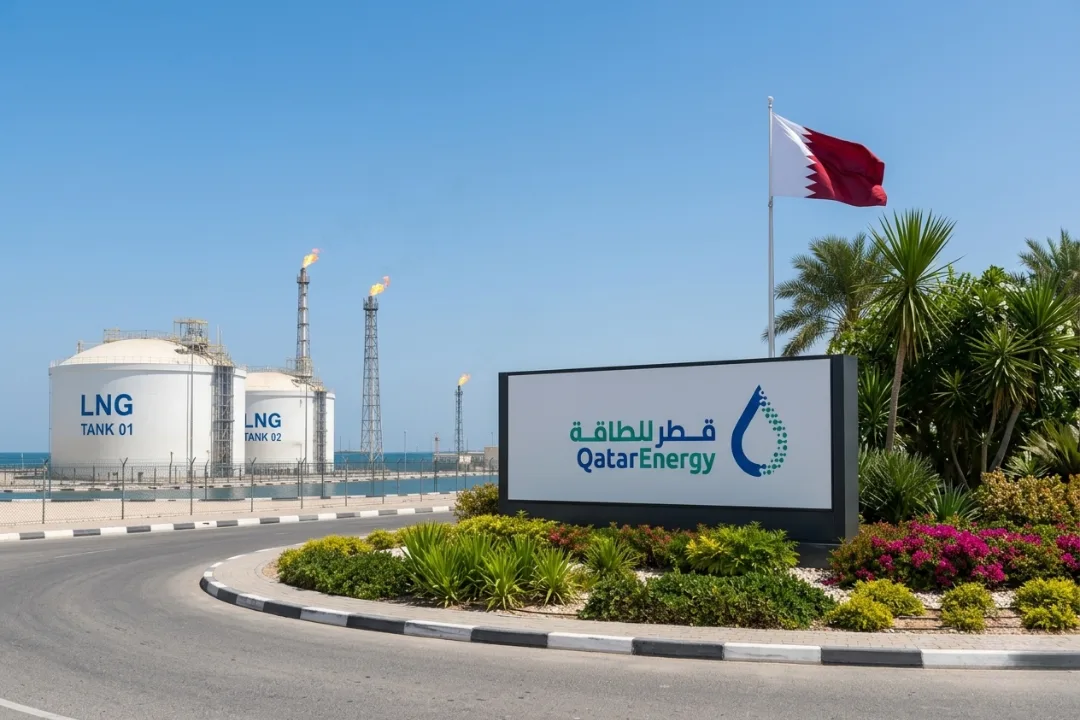
Italy's energy sector is facing renewed pressure after QatarEnergy extended its force majeure on liquefied natural gas (LNG) deliveries, leading to the cancellation of more scheduled cargoes destined for the country.
Italian utility Edison confirmed that a total of 17 LNG shipments have now been cancelled under the ongoing supply disruption, with the latest extension expected to affect deliveries until mid-August 2026.
The development comes at a time when European energy markets are already navigating geopolitical uncertainty and working to secure stable long-term gas supplies.
Supply Disruptions Continue Into August
QatarEnergy's latest notice extends the current force majeure period from early July through the middle of August, meaning that five additional cargoes originally scheduled for Italy will no longer be delivered.
The extension represents another challenge for Edison, one of QatarEnergy's largest customers in Europe.
Under a long-term supply agreement, Edison is entitled to receive approximately 6.4 billion cubic metres of LNG each year from Qatar. However, deliveries have been repeatedly disrupted in recent months as tensions in the Middle East continue to affect regional energy flows.
With the newest cancellations, the total volume of gas affected has reached around 2.2 billion cubic metres, all of which was expected to arrive at Italy's Adriatic LNG terminal.
Edison Turns to Alternative Suppliers
Despite the disruption, Edison says it has been actively securing replacement supplies to maintain stable operations.
The company has sourced alternative LNG cargoes from international markets, with the United States emerging as one of the key replacement suppliers.
Earlier this year, Edison successfully replaced nine cancelled shipments, covering roughly 1 billion cubic metres of natural gas that would otherwise have been lost.
The strategy reflects a broader shift taking place across Europe, where energy companies are increasingly diversifying their supply chains to reduce dependence on any single source.
No Immediate Impact on Consumers
Although the extended force majeure is creating operational and financial challenges, Edison has reassured customers that there is currently no risk to household or business gas supplies.
Italy has spent the past several years expanding its LNG infrastructure and building relationships with multiple exporters to improve energy security.
These efforts are now helping cushion the impact of supply disruptions and allowing the country to continue meeting domestic demand.
Energy experts say the current situation highlights why diversification has become a strategic priority for European governments and utilities alike.
Financial Pressure Mounts for Edison
The LNG disruptions are also taking a toll on Edison's financial performance.
The company recently reported a weaker first quarter, with executives attributing a large part of the decline to the interruption in Qatari LNG supplies.
Edison has also revised its financial outlook for the remainder of 2026, citing uncertainty surrounding developments in the Middle East and their potential effect on global energy markets.
Investors are expected to closely monitor how long the force majeure remains in place and whether additional supply interruptions could occur later in the year.
New US LNG Project Could Provide Relief
There is, however, some positive news on the horizon.
Industry sources expect Italy to begin receiving LNG from the Golden Pass LNG export facility in the United States starting this month.
The project is jointly owned by QatarEnergy and Exxon Mobil and is regarded as one of the most important new LNG export terminals currently entering the market.
Additional volumes from Golden Pass could help compensate for some of the lost shipments and improve supply stability for Italy and other European buyers.
Europe Watches Closely
The latest extension serves as another reminder of how sensitive global LNG markets remain to geopolitical developments.
While Europe has made significant progress in diversifying energy imports over the past few years, unexpected supply disruptions continue to influence pricing, procurement strategies and long-term planning.
For Italy, the immediate focus remains on securing replacement cargoes and ensuring uninterrupted gas supplies.
For the wider European market, the situation underscores the importance of flexibility and supply diversification in an increasingly uncertain global energy landscape.
As events continue to unfold, energy companies and policymakers alike will be watching closely to see when normal LNG deliveries from Qatar can fully resume.